
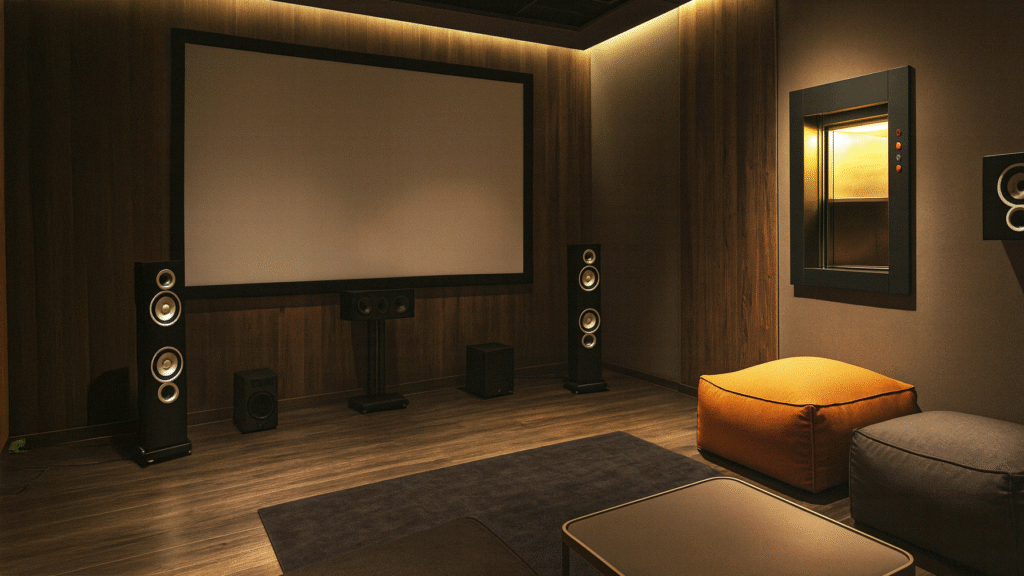

In many modern buildings, noise control is just as important as performance. Luxury homes, open-plan kitchens, boutique hotels, private dining spaces, clinics, and wellness environments all rely on calm, controlled atmospheres. In these settings, even low levels of mechanical noise can disrupt the experience. This makes acoustic performance a critical consideration when specifying a dumbwaiter.
A well-designed dumbwaiter should move items efficiently between floors without drawing attention to itself. At Husbands, quiet operation is a core part of our bespoke dumbwaiter approach, particularly for environments where discretion and comfort matter most.
Why Noise Matters More Than Ever
Contemporary architecture increasingly favours open layouts, minimal separation between spaces, and hard surface finishes. While visually striking, these designs allow sound to travel more easily. A poorly specified dumbwaiter can introduce unwanted noise through vibration, abrupt motor starts, or rattling components.
In noise-sensitive environments, this can affect guest comfort, disrupt conversations, and undermine the overall feel of a space. Addressing acoustics at the design stage avoids these issues and ensures the lift supports, rather than detracts from, the environment. This is especially important in open layouts such as open-plan kitchens, where sound travels easily between spaces.
The Engineering Behind Quiet Operation
Achieving quiet performance is not about a single component. It is the result of careful engineering across the entire system.
Motor selection plays a major role. Modern, high-quality motors operate more smoothly and consistently, reducing mechanical noise during travel. When paired with refined control systems, acceleration and deceleration are gradual rather than abrupt, limiting vibration through the building structure.
Mounting and isolation are equally important. Vibration can transfer into surrounding walls and floors if components are not properly isolated. Acoustic buffers, resilient mountings, and precise alignment all help prevent this transfer, keeping sound levels low in adjacent rooms.
Shaft Design and Structural Considerations
The lift shaft itself can amplify noise if not designed correctly. Bespoke dumbwaiters allow shaft dimensions and materials to be considered as part of the acoustic strategy. Tight tolerances reduce movement within the shaft, while appropriate linings help absorb sound rather than reflect it.
In existing buildings, especially those with solid masonry or timber structures, careful assessment ensures the installation works with the building fabric rather than against it. This is particularly important in conversions or heritage properties where sound can travel unpredictably.
Door Systems and Contact Noise
Doors are another common source of unwanted noise. Poorly fitted or low-quality door mechanisms can rattle, slam, or vibrate during operation. Bespoke systems allow door types and closing mechanisms to be selected with noise reduction in mind.
Soft-close features, accurate tolerances, and robust interlocks all contribute to quieter operation. When doors are integrated into joinery or wall finishes, careful detailing ensures they remain discreet both visually and acoustically.
Placement Within the Building
Where a dumbwaiter is located has a significant impact on perceived noise. Positioning lifts away from bedrooms, dining areas, or treatment rooms can make a noticeable difference. Early collaboration between architects and designers and lift specialists allows optimal placement without compromising layout or circulation. In some cases, relocating a lift by even a small distance or adjusting landing positions can dramatically improve acoustic outcomes.
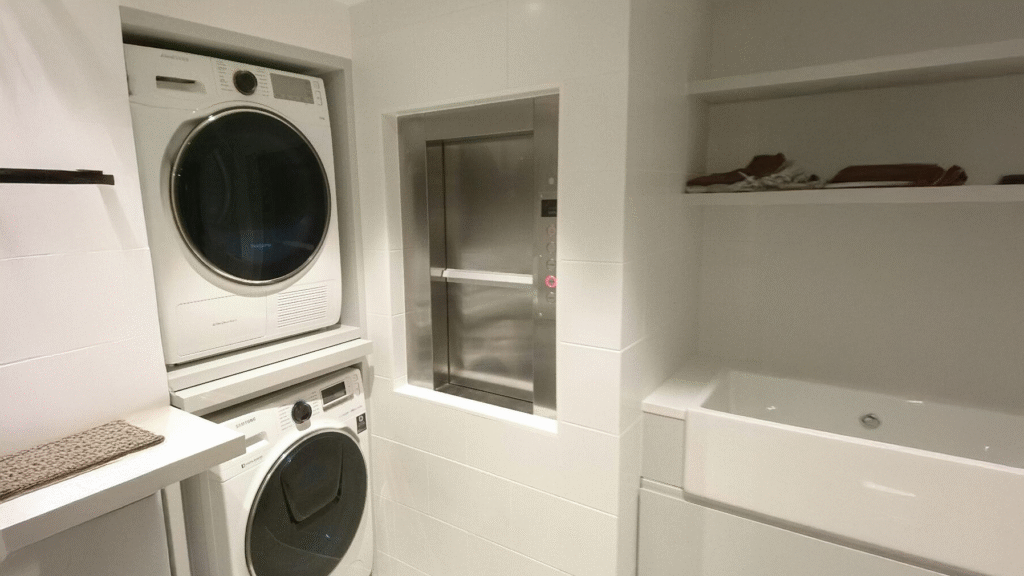
Ideal Applications for Quiet Dumbwaiters
Low-noise dumbwaiters are particularly valuable in:
- Luxury residential properties with open-plan living
- Boutique hotels and serviced apartments
- Private dining rooms and fine dining restaurants
- Spas, clinics, and wellness centres
- Libraries, galleries, and heritage buildings
In each of these environments, discreet operation supports the overall experience and reinforces a sense of quality.
Why Bespoke Design Makes the Difference
Standard dumbwaiters are rarely designed with acoustic performance as a priority. As outlined in our comparison of bespoke dumbwaiters versus off-the-shelf models, generic systems often lack the refinement required for noise-sensitive environments. Bespoke systems allow every element, from motor selection to door detailing, to be specified with noise reduction in mind. This level of control is essential in environments where quiet operation is non-negotiable and where dumbwaiters must integrate seamlessly into luxury interiors.
By tailoring the design to the building and its use, bespoke dumbwaiters deliver reliable performance without introducing unnecessary disturbance.
Conclusion
Designing a quiet dumbwaiter requires more than selecting a lift with the right capacity. It involves understanding how sound moves through a building and engineering a system that operates smoothly, consistently, and discreetly.
For architects and designers working on noise-sensitive projects, early involvement from a specialist ensures acoustic performance is considered from the outset. The result is a dumbwaiter that enhances functionality while preserving the calm, refined atmosphere the space is designed to deliver.