
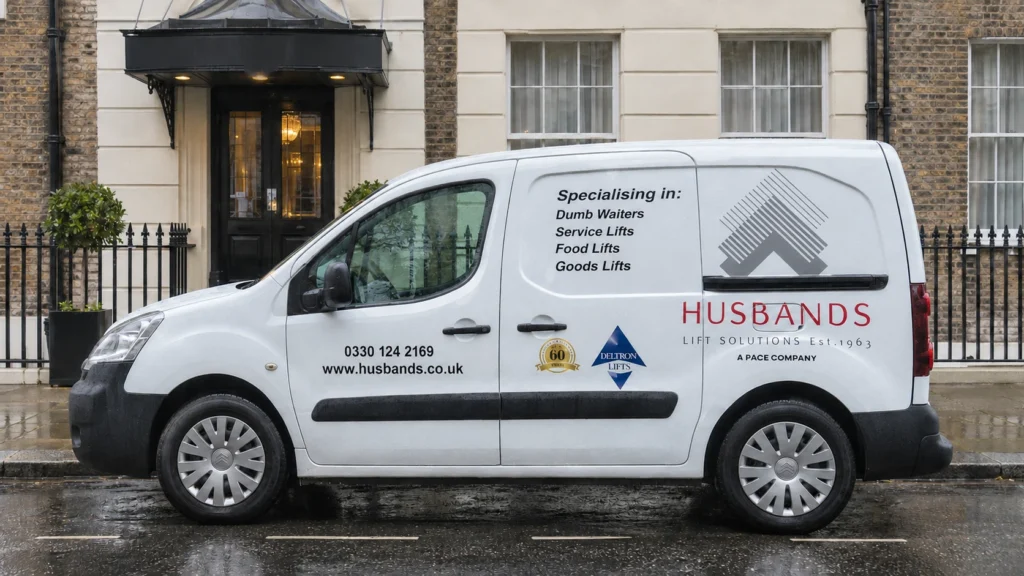

A hotel dumbwaiter is a small goods-only lift used to move meals, crockery and supplies between floors. By connecting kitchens with dining rooms, service pantries or other staff areas, it can reduce repeated carrying on stairs and help service run more smoothly.
The benefit to guests is usually indirect. A well-positioned dumbwaiter helps staff move orders and supplies through the building, supporting more consistent service behind the scenes.
However, a compact food lift is not suitable for every hotel load. Laundry trolleys, bulky equipment and luggage may require a different lift specification.
What are dumbwaiters used for in hotels?
Hotel dumbwaiters are most useful where staff regularly move smaller items between floors. The right application depends on the building’s layout and how its catering and housekeeping teams work.
| Hotel task | Potential lift arrangement | What to check |
|---|---|---|
| Moving meals from a basement kitchen to a restaurant | Counter-height food dumbwaiter | Tray dimensions, shelving and peak demand |
| Sending breakfast supplies to another floor | Service dumbwaiter | Container sizes, load weight and receiving space |
| Moving room-service orders to floor pantries | Dumbwaiter serving staff areas | Collection arrangements and onward delivery |
| Moving linen on wheeled carts | Floor-loading trolley lift | Loaded trolley weight and overall dimensions |
| Transporting bulky stock or equipment | Larger goods lift | Car size, door opening and loading method |
A dumbwaiter should be selected around a defined task. Trying to use one small lift for every department can create bottlenecks rather than resolve them.
How can a hotel dumbwaiter improve food service?
When a kitchen and restaurant are on different floors, staff may spend a considerable part of service carrying trays between them.
A dumbwaiter provides a dedicated route for suitable food loads. Kitchen staff place the order in the car, send it to the receiving floor and notify colleagues according to the hotel’s service procedure.
This can reduce stair journeys and help waiting staff remain closer to the dining area. The benefit depends on several practical details:
- How close the landing doors are to preparation and collection points.
- Whether the car accommodates the hotel’s trays and covered dishes.
- How orders are identified and collected.
- Whether capacity is sufficient during breakfast, dinner or event service.
- How used crockery is returned without disrupting outgoing orders.
A lift journey is only one part of the process. Food still needs suitable protection, prompt collection and appropriate handling.
Husbands’ commercial dumbwaiters offer different capacities and configurations for catering and hospitality applications.
Can a dumbwaiter deliver room service?
A dumbwaiter can carry room-service orders from a kitchen to a designated service point on another floor. Staff then collect the order and deliver it to the guest’s room.
For this arrangement to work well, there needs to be a suitable receiving area and a clear collection procedure. Otherwise, an order may simply move from waiting in the kitchen to waiting at an upstairs landing.
Consider who will receive each delivery, how they will know it has arrived and where trays can be placed without obstructing a corridor.
Can hotel dumbwaiters carry laundry and luggage?
Some smaller linen loads or individual items may fit a suitably specified dumbwaiter. However, suitability depends on the car dimensions, rated capacity and intended use.
For housekeeping teams working with loaded linen carts, a counter-height dumbwaiter may create extra handling. Staff would need to unload the cart, transfer its contents into the lift and reload them at the destination.
A floor-loading trolley lift may be more practical because a suitable cart can travel with its contents. The combined weight of the cart and load must remain within the lift’s rated capacity.
Luggage also varies considerably in size. A hotel needing to move large suitcases or luggage carts should specify that requirement from the outset rather than assume a food dumbwaiter will accommodate them.
Dumbwaiters are goods-only lifts. Staff and guests must never travel inside them.
Where should a dumbwaiter be positioned in a hotel?
The best location connects the areas generating frequent journeys while allowing convenient loading and collection.
For example, a basement kitchen and ground-floor restaurant may benefit from a short, direct connection. A hotel serving several dining or event spaces may need a different arrangement.
Before deciding where the lift should go, map:
- The origin and destination of the main loads.
- Staff routes during busy periods.
- Space needed to approach and open each landing door.
- Nearby preparation surfaces or trolley parking.
- Potential conflicts with guest areas.
- Access for servicing and repairs.
Noise and vibration should also be considered where a proposed shaft adjoins bedrooms or quiet public spaces. These issues are easier to assess before the layout is finalised.
What size dumbwaiter does a hotel need?
Choose the capacity and dimensions around the actual load, rather than the number of hotel rooms alone.
A compact hotel with a busy restaurant may place greater demands on its food lift than a larger property offering limited catering.
Measure the largest trays, containers or items that need to travel. Then consider their loaded weight, how many must move together and the number of journeys expected during peak periods.
Car width and depth are particularly important for catering trays. Shelving may increase usable loading space, but its arrangement must suit the dishes being transported.
Where standard configurations do not suit the building, a bespoke assessment can establish the available options.
Can a dumbwaiter be installed in an existing hotel?
An existing hotel may be able to accommodate a dumbwaiter, subject to a survey and assessment of the proposed installation.
The project needs to account for structural openings, shaft space, headroom, electrical supply, fire protection and maintenance access. In an occupied hotel, the work programme also needs to consider disruption to guests and essential services.
Older or unusually arranged buildings may require a tailored approach. An apparently convenient cupboard or unused corner is not enough to confirm feasibility; the full route between floors needs to be assessed.
What maintenance does a hotel dumbwaiter need?
A hotel dumbwaiter should have planned maintenance suited to its condition, manufacturer’s instructions and level of use.
Staff should also know how to recognise and report problems, including damaged doors, unreliable controls, unusual noises or poor levelling at the landing. Safety devices must never be bypassed to keep service moving.
Workplace lifting equipment is subject to relevant safety duties, including maintenance and statutory thorough examination. HSE’s LOLER guidance explains these responsibilities. Routine servicing and thorough examination are separate activities.
Husbands provides dumbwaiter maintenance and repairs to support ongoing reliability.
Hotels should also have a practical fallback procedure for moving essential supplies if the lift is temporarily unavailable.
Choosing a dumbwaiter for your hotel
The strongest reason to install a dumbwaiter is a recurring operational problem: meals carried up stairs, supplies repeatedly moved between levels or staff leaving service areas to collect orders.
Define that problem first. Then assess the loads, landing positions and peak demand before choosing the equipment.
Husbands helps hotels specify dumbwaiters, trolley lifts and goods lifts around their buildings and working requirements. Contact the team to discuss your layout, what needs to move and the most suitable arrangement.