
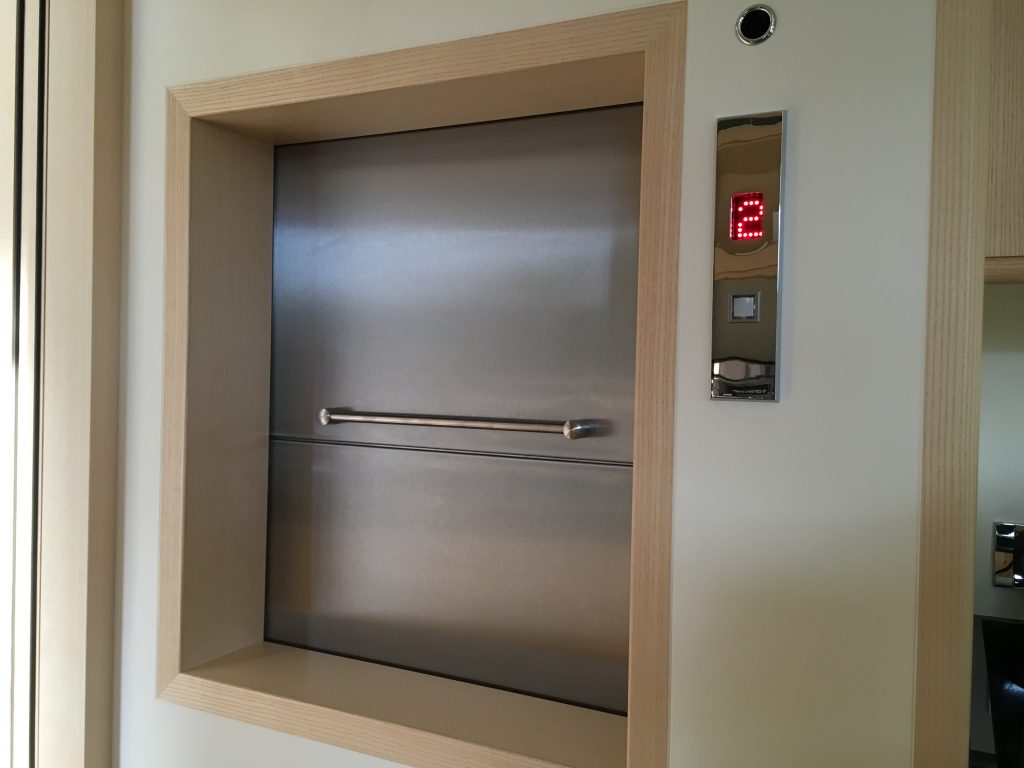

When choosing a dumbwaiter for your project, you may come across the Microlift, a well-known standard dumbwaiter brand, and bespoke dumbwaiters, which are tailored to specific requirements of a project. While both serve the same core function of transporting goods between floors, their differences can have a significant impact on design, performance, and long-term usability.
In this guide, we compare the Microlift vs. bespoke dumbwaiters to help you determine which is the best choice for your needs. Understanding the strengths and limitations of each will ensure your chosen lift meets the demands of your specific environment.
What is a Microlift Dumbwaiter?
A Microlift is a widely used standard dumbwaiter designed for commercial settings such as restaurants, offices, and retail spaces. These lifts are pre-manufactured with fixed specifications and sizes, making them a convenient choice for projects that require a straightforward installation process with minimal adjustments.
Key Features of a Microlift Dumbwaiter
Microlift dumbwaiters come in standard sizes, typically available in 50kg and 100kg weight capacities, which suit a range of small-scale commercial applications. Constructed primarily from stainless steel, they offer durability and hygiene, making them well-suited for food service and medical environments.
These lifts are often equipped with standard bi-parting or swing doors, allowing for easy access to transported goods. Because they are pre-designed, installation is usually quick and efficient, reducing downtime for businesses that need a simple and effective goods lift solution.
Where a Microlift Works Best
A Microlift is used for commercial applications where customisation is not required. Businesses opt for these lifts because they are a straightforward option that fits neatly into an existing dumbwaiter shaft. Typical use cases include:
- Restaurants & Cafés: Efficiently moving food, dishes, and supplies between kitchen and dining areas.
- Offices & Corporate Buildings: Transporting mail, files, and office supplies between different floors.
- Shops & Retail Spaces: Moving stock between storage rooms and shop floors.
- Hotels & Hospitality: Providing an easy method for moving cleaning supplies, laundry, or service items between floors.
While Microlift models are effective for these applications, they can lack the flexibility needed for projects requiring specific size adjustments, premium finishes, or specialist configurations.

What is a Bespoke Dumbwaiter?
A bespoke dumbwaiter is a tailored solution designed to fit specific architectural, functional, or aesthetic requirements. Unlike a standard Microlift, a bespoke dumbwaiter can be built to match non-standard dimensions, unique materials, and specialist uses.
Key Features of a Bespoke Dumbwaiter
Bespoke dumbwaiters are designed to seamlessly integrate into their surroundings, offering much greater flexibility in terms of size, materials, and configurations. Whether a project requires larger weight capacities, a specific door mechanism, or finishes that match a high-end interior, a bespoke dumbwaiter provides the adaptability that standard models lack.
For instance, size flexibility is a major advantage of bespoke dumbwaiters. While Microlift models have fixed dimensions, bespoke lifts can be designed to fit unusual shaft spaces or comply with specific architectural constraints. This is particularly valuable in heritage buildings, luxury properties, and boutique commercial environments where space and aesthetics play a significant role.
Where Bespoke Dumbwaiters Work Best
Bespoke dumbwaiters are essential for projects that require flexibility, higher performance, or design integration. Because they are custom-made, they are often found in:
- Luxury Homes & Apartments: Where the lift is discreetly incorporated into kitchen cabinetry or hidden behind panelled doors.
- Boutique Hotels & Private Clubs: Where high-end finishes such as wood, brass, or powder-coated steel are required to match premium interiors.
- Historic & Heritage Buildings: Where precise sizing is necessary to avoid modifying existing structures.
- Specialist Commercial Environments: Where heavier-duty lifting capacity or unique access configurations are needed.
Bespoke dumbwaiters not only provide aesthetic integration, but they also ensure functionality tailored to specific use cases, offering an advanced level of performance and durability beyond standard models.

Comparing Microlift vs. Bespoke Dumbwaiters
| Feature | Microlift Dumbwaiter | Bespoke Dumbwaiter |
|---|---|---|
| Size Flexibility | Pre-set sizes only | Fully tailored to project requirements |
| Weight Capacity | 50kg – 100kg | 50kg – 300kg+ |
| Material Options | Stainless steel | Choice of wood, brass, hidden panels, powder-coated finishes |
| Installation Time | Faster due to pre-set manufacturing | Longer due to made-to-measure production |
| Best For | Basic commercial applications | High-end, complex, and tailored builds |
While both options have their benefits, the choice ultimately depends on the specific needs of the project.
Which One is Right for Your Project?
Choose a Microlift if:
If you are working on a project where cost-efficiency and quick installation are the primary concerns, a Microlift dumbwaiter may be the right option. These lifts are best suited to environments where pre-set dimensions and materials meet the needs of the project without the need for further customisation.
Microlifts can be considered when:
- You need a quick, cost-effective solution for commercial use.
- Your project has standard shaft dimensions that match available models.
- A stainless steel finish is suitable for your space.
- You require a basic service lift with no specialist configurations.
Choose a Bespoke Dumbwaiter if:
A bespoke dumbwaiter is the right choice when architectural integration, unique functionality, or higher weight capacity are essential. If your project demands aesthetic cohesion, specialist features, or flexible design, a bespoke lift is the best solution.
You should consider a bespoke dumbwaiter if:
- Your project has irregular shaft dimensions or space limitations.
- You need a tailored finish to blend into a high-end interior.
- You are designing for luxury, boutique, or heritage buildings.
- You require specialist features like extra weight capacity, silent operation, or unique door configurations.
Conclusion
Both Microlifts and bespoke dumbwaiters have their place in commercial and residential settings. A Microlift offers a reliable, standardised solution, whereas bespoke dumbwaiters provide tailored functionality and high-end design integration.
If your project requires flexibility, premium finishes, or unique configurations, a bespoke dumbwaiter is the better investment. At Husbands Lifts, we specialise in both standard and bespoke dumbwaiters, ensuring that every lift we supply is built for long-term performance and seamless integration. Let us help you find the perfect dumbwaiter for your project – contact us today to get started.