
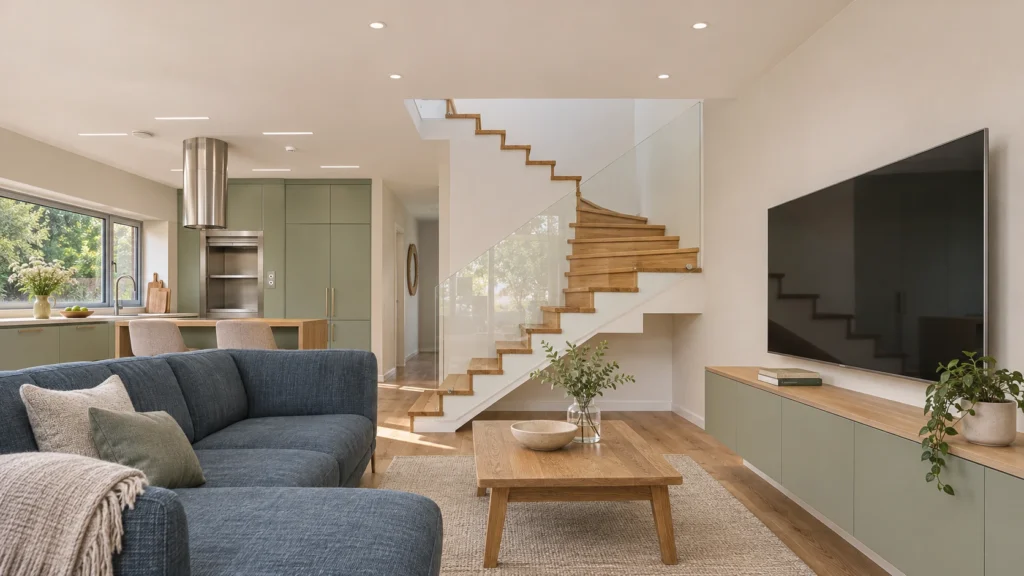

Houses have dumbwaiters to move groceries, meals, laundry and other items between floors without carrying them on the stairs. A residential dumbwaiter is a small goods-only lift, particularly useful when kitchens, utility rooms, garages or dining areas are on different levels.
In older houses, a dumbwaiter may have connected a kitchen with the rooms it served. In modern homes, the purpose remains practical: making everyday tasks easier while fitting into the layout and interior design.
A dumbwaiter carries goods only. It must never be used to transport people or pets.
What is a residential dumbwaiter?
A residential dumbwaiter is an enclosed lift that transports household items between two or more floors. It has a small lift car, access doors at the floors it serves and controls for sending or calling the car.
Modern installations are generally electrically operated. The user loads the car, closes the landing door and selects the destination. The items are then collected at the receiving floor.
Unlike a passenger home lift, a dumbwaiter does not provide access for people. Its purpose is to reduce the need to carry things between levels.
What are dumbwaiters used for in houses?
The most useful applications depend on how the household uses each floor. A dumbwaiter should connect places between which items regularly need to move.
| Household task | How a dumbwaiter can help |
|---|---|
| Bringing shopping inside | Transfers groceries from a lower entrance or garage level to the kitchen |
| Moving laundry | Connects bedroom floors with a separate utility or laundry room |
| Serving meals | Moves dishes between a kitchen and dining or entertaining space |
| Accessing basement storage | Brings suitable supplies up to the floors where they are needed |
| Returning crockery | Sends used dishes back to the kitchen after meals |
Groceries between an entrance and an upstairs kitchen
In a house with an upstairs kitchen, bringing shopping home can involve several trips on the stairs. A dumbwaiter can move bags or suitable containers from the entrance level to the kitchen.
The lift should be sized around the items normally carried. A suitable weight capacity is important, but the door opening and usable car dimensions matter too.
Laundry between bedrooms and a utility room
A dumbwaiter can move laundry between bedroom floors and a basement or ground-floor utility room.
This can be particularly useful where laundry baskets are awkward to carry on stairs. If a basket is intended to travel inside the lift, its dimensions should be included in the specification.
Food and dishes between separate floors
Some homes have a kitchen below the dining room, a roof terrace used for entertaining or a separate preparation kitchen.
A dumbwaiter provides a route for meals and crockery between these areas. The car dimensions, shelving and loading height should suit the trays and dishes being used. Food and liquids need suitable containers to prevent movement and spills.
Are dumbwaiters only found in old houses?
No. Although traditional dumbwaiters might be associated with older period properties, they are being incorporated into new homes, extensions and substantial renovations.
Their usefulness depends more on the layout than the age of the building. A modern townhouse with several floors may benefit from a dumbwaiter just as much as a period property with a basement kitchen.
An existing dumbwaiter in an older house should be assessed before being returned to use. Its condition, safety arrangements and suitability cannot be established from appearance alone.
Can you install a dumbwaiter in an existing house?
It may be possible to fit a dumbwaiter into an existing home, subject to a survey and assessment of the proposed route.
The main considerations include:
- Whether suitable positions align between floors.
- The structure of the floors and surrounding building.
- Space for the shaft, machinery and landing doors.
- Available headroom and any pit requirements.
- Electrical supply and access for maintenance.
- The effect on adjoining rooms and circulation space.
A small lift car still needs room for its enclosure and operating equipment. Identifying a spare cupboard on each floor is a starting point, rather than confirmation that an installation will fit.
For older properties, Historic England’s guidance on making improvements to an older home provides a useful starting point for owners in England considering alterations and the advice they may need.
Can a dumbwaiter blend into the interior?
A residential dumbwaiter can be designed to complement the surrounding interior rather than look like commercial kitchen equipment.
Depending on the installation, options may include colour-matched landing doors, coordinated finishes or integration with cabinetry. The design must still allow the lift doors, controls and safety systems to function correctly, with appropriate access for servicing.
Husbands’ bespoke dumbwaiters can be configured around the available space, intended loads and interior requirements.
Involving the lift specialist alongside the architect or kitchen designer helps coordinate the practical requirements before cabinetry and finishes are finalised.
Does a dumbwaiter make a home more accessible?
A dumbwaiter can reduce the need to carry items on stairs. This may be helpful for someone who finds lifting or carrying difficult but can still move between floors independently.
However, it does not provide step-free access or replace a passenger lift. If a person needs help travelling between levels, a separate assessment of suitable access equipment is needed.
The loading arrangement also matters. Doors and controls should be positioned so the intended users can reach and operate them comfortably.
Do residential dumbwaiters need maintenance?
Yes. A dumbwaiter in a private home still needs care, even if it makes fewer journeys than one in a busy restaurant.
Maintenance requirements should follow the manufacturer’s instructions and reflect the equipment’s age, condition and use. Doors, interlocks, controls and lifting components all need appropriate attention.
Owners should keep within the rated load, prevent loose items from obstructing the doors and report faults promptly. If the lift develops unusual noises, damaged doors or unreliable operation, stop using it and seek advice.
Husbands provides dumbwaiter servicing and repairs to help keep installations working reliably.
Is a dumbwaiter worth installing in your home?
A dumbwaiter is most useful when it solves a frequent, specific problem: shopping repeatedly carried to an upstairs kitchen, laundry travelling several floors or meals served away from the kitchen.
Before specifying one, consider:
- What will you move most often?
- Which floors need to be connected?
- Will the largest items fit through the doors and inside the car?
- Are the loading positions convenient?
- How will the installation fit into the building and be maintained?
There is no need to justify a residential dumbwaiter through an assumed increase in property value. Its main benefit is how well it supports everyday life in that particular home.
If you are planning a new house, renovating an existing property or exploring an unusual layout, contact Husbands to discuss what you need to move and where. The team can help establish whether a dumbwaiter is suitable and what the installation would involve.