
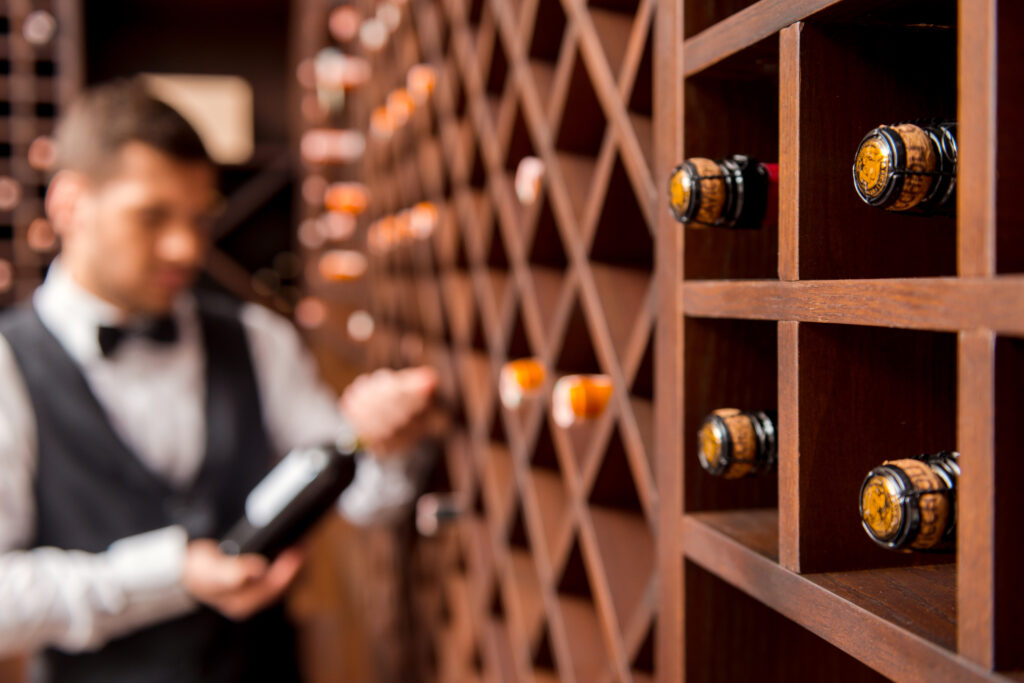

Wine cellars and tasting rooms are usually tucked away from the main entertaining or service areas, often on a lower level, separate from where wine is actually served. A dumbwaiter bridges that gap: a clean, quiet, practical way to move bottles, glassware, and catering items between floors, without the risk that comes with carrying them by hand.
Why a Dumbwaiter Suits Wine Spaces
Carrying multiple bottles, trays of glasses, or catering items up and down stairs is a genuine risk, both to the wine and to whoever is carrying it. A dumbwaiter removes that risk entirely, providing a dedicated, secure route between floors instead. In a tasting room specifically, this also means staff can serve snacks, extra bottles, or tasting boards without leaving the room or breaking the flow of an event, keeping their focus on guests rather than logistics.
At Husbands, we have over 60 years of experience designing and installing bespoke dumbwaiters for luxury homes, private clubs, and hospitality venues, including wine-focused spaces like these.
Key Features Worth Specifying
Wine applications have specific requirements that a standard specification does not always account for. We would typically recommend:
- Soft-start, soft-stop motors to prevent jostling or vibration that could disturb fine wines during transit
- Insulated cabins where temperature stability matters for preserving bottle condition
- Stainless steel or timber interiors, chosen to suit both hygiene requirements and the interior design of the space
- Quiet operation, preserving the calm, considered atmosphere that cellars and tasting rooms are built around
- Smart controls, allowing easy calling between service areas without manual operation
Discreet Design for High-End Spaces
Wine-focused spaces are usually designed with real attention to atmosphere, and a dumbwaiter should not disrupt that. A bespoke unit can be specified with custom finishes, hidden panels, and minimal control interfaces so it blends into the space rather than standing out. We work closely with architects, interior designers, and homeowners to make sure each installation complements the room in both form and function, whether that is a modern tasting lounge or a traditional subterranean cellar.
Supporting Service as Well as Storage
For venues running professional tastings, wine education events, or private dining, a dumbwaiter supports smoother logistics as well as safer transport. Staff can move wine and service items without leaving the room, keeping back-of-house activity out of sight and preserving the curated feel of the space, whether that is a private residence, a wine bar, or a high-end restaurant.
Installing in an Existing Cellar
Most wine cellars were not built with a lift in mind, which means installation is usually a retrofit into an existing space rather than a clean build. This brings its own considerations: cellars are often below ground, which can mean restricted headroom, older or non-standard structural layouts, and limited access for construction work. None of this rules out a dumbwaiter, but it does mean an accurate site assessment matters more here than in a straightforward new-build installation, so the specification accounts for the real constraints of the space rather than a generic one.
Compliance and Ongoing Care
Like any workplace lifting equipment, a dumbwaiter installed in a commercial wine cellar or tasting room is subject to LOLER thorough examination requirements, alongside routine servicing to keep it reliable. This applies whether the installation serves a private home used for hosting or a full commercial hospitality operation. See our guide on LOLER inspections and compliance for what that involves, and our guide on what affects dumbwaiter lift cost for a sense of what a bespoke installation like this typically involves.
Getting the Right Fit
Every wine cellar and tasting room is different, so the right specification depends on the layout, distances involved, and the level of temperature control needed. Explore our bespoke dumbwaiter solutions for more on what is possible, or get in touch to discuss your specific space.
Frequently Asked Questions
Can a dumbwaiter keep wine at a stable temperature during transit? An insulated cabin helps maintain temperature stability during the short journey between floors, though the dumbwaiter itself is not a storage solution, it is there to move bottles safely and quickly between where they are stored and where they are served.
Will a dumbwaiter disturb fine wines during transport? Soft-start, soft-stop motors are specifically designed to avoid the jostling or vibration that could disturb sediment or otherwise affect delicate bottles.
Can a dumbwaiter be hidden within a period or traditional cellar design? Yes. Bespoke units can be specified with custom finishes and hidden panels to blend into the space rather than stand out, suited to both traditional and modern settings.
Is this only relevant for private homes, or also for hospitality venues? Both. Private collectors, wine bars, restaurants, and tasting rooms all use dumbwaiters for the same core benefit: safer, quieter, more discreet movement of wine between floors.
How do I know what specification is right for my space? It depends on your layout, the distance involved, and how much temperature control matters for your collection. Get in touch to talk through your specific space.