
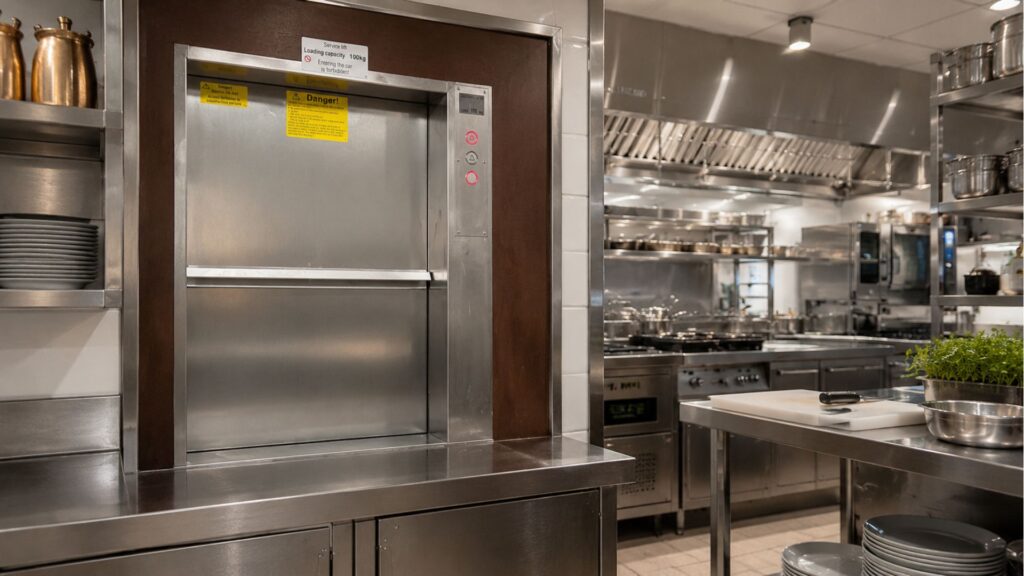

How long should a dumbwaiter last? It is a common question across hospitality, healthcare, commercial buildings, residential developments and specification projects. The answer, however, is rarely determined by age alone.
Two systems installed in the same year can experience very different service lives. One may continue operating reliably decades later. Another may become increasingly problematic much sooner.
The difference usually comes down to a combination of installation quality, usage intensity, maintenance history, operating environment and how the system is managed as it ages.
Understanding these factors matters for facilities managers, property owners, architects and operators looking to protect long-term reliability and avoid avoidable downtime.
How Installation Quality Affects Dumbwaiter Lifespan
Dumbwaiter lifespan often starts with decisions made long before the lift enters service. System selection, shaft conditions, loading arrangements, component specification and installation standards all influence long-term performance.
A well-installed system operating within suitable tolerances generally experiences less strain across its mechanical and electrical components. Alignment issues, poor commissioning, unsuitable configurations or compromised installation conditions can introduce problems that quietly shorten component life over time.
This is particularly relevant in demanding environments such as commercial kitchens, healthcare settings and busy mixed-use buildings where operational consistency matters.
Early design coordination and appropriate specification can make a meaningful difference to long-term maintainability.
How Usage Levels And Duty Cycle Impact Dumbwaiter Service Life
Not all dumbwaiters live the same operational life. A residential dumbwaiter used periodically throughout the week faces very different demands compared with a hospitality or healthcare system moving goods repeatedly throughout the day.
Usage intensity, often described as duty cycle, plays a major role in lifespan.
Higher usage places greater demand on:
- motors and drive systems
- door mechanisms and interlocks
- control systems
- runners, guides and moving assemblies
- electrical switching components
A lightly used system may retain acceptable performance for many years with routine servicing.
A heavily used lift operating continuously within a busy kitchen, hotel or healthcare environment may require a far more proactive maintenance strategy to achieve comparable longevity.
Operational context matters as much as calendar age.
How Operating Environment Affects Dumbwaiter Reliability And Lifespan
The operating environment can have a surprisingly large impact on system lifespan.
Commercial kitchens expose lifts to heat, grease, moisture and intensive cleaning regimes. Healthcare environments may demand strict hygiene controls and high operational reliability. Residential settings often experience lighter usage but may involve concealed installations or restricted access for servicing.
Environmental factors that commonly influence lifespan include:
- heat and humidity
- grease contamination
- airborne dust or debris
- moisture exposure
- cleaning chemicals
- restricted ventilation
These conditions affect electrical components, moving assemblies, wiring integrity and overall system cleanliness. Even a technically sound lift can deteriorate faster when environmental pressures are left unmanaged.
Why Dumbwaiter Servicing And Preventative Maintenance Extend Lifespan
Across most sectors, preventative servicing remains one of the strongest predictors of dumbwaiter longevity.
Routine maintenance helps identify wear, adjustment issues, electrical deterioration and developing faults before they escalate into larger operational problems.
Without regular servicing, relatively minor issues often progress quietly in the background.
A worn guide shoe, drifting alignment issue, ageing relay or degraded door mechanism may not immediately stop operation. Over time, however, those smaller problems can place additional stress on connected systems and accelerate broader deterioration.
A structured servicing programme supports:
- reliability and uptime
- component longevity
- safety performance
- predictable maintenance planning
- reduced emergency breakdown risk
Husbands support businesses, property owners and building stakeholders through nationwide lift servicing, maintenance and technical support tailored to different operational environments.
Ageing Control Systems, Obsolete Parts And Dumbwaiter Reliability
Many older dumbwaiters continue to provide strong mechanical service long after their original electrical systems begin to show their age. Control systems, relays, switching assemblies and legacy electrical components often become key pressure points within ageing installations.
As systems mature, operators may begin to encounter:
- intermittent faults
- slower response times
- reliability inconsistencies
- harder-to-source components
- increased diagnostic complexity
When original manufacturers discontinue parts or older technologies become increasingly unsupported, maintenance becomes more difficult, lead times increase and repair pathways narrow. This is where component strategy becomes important.
Access to appropriate service lift spare parts and technical product knowledge can significantly influence whether a system remains economically maintainable.
Component quality also matters. Poor-quality replacements can create recurring faults, reduced reliability and shortened service intervals. Husbands explore this further in their guide to why dumbwaiter spare parts quality matters.
How Overloading, Misuse And Poor Maintenance Shorten Dumbwaiter Lifespan
Some lifespan issues are not technical failures at all. They stem from operational behaviour.
Repeated overloading, misuse, inappropriate loading practices or neglected maintenance can dramatically shorten service life.
Examples may include:
- exceeding rated capacity
- transporting unsuitable items
- forcing doors or access points
- ignoring recurring faults
- postponing servicing after known issues emerge
A lift that continues running despite warning signs often accumulates hidden damage. Addressing smaller operational concerns early is typically more cost-effective than dealing with secondary failures later.
How Refurbishment And Modernisation Can Extend Dumbwaiter Lifespan
Ageing does not automatically mean replacement. Many dumbwaiters benefit from targeted upgrades that extend usable lifespan while improving reliability, maintainability and performance.
Depending on system condition, modernisation may involve:
- control upgrades
- electrical system improvements
- drive or motor upgrades
- safety enhancements
- component renewal programmes
In many cases, focused intervention can deliver meaningful lifecycle gains without the disruption or cost profile of complete replacement.
Husbands support building owners and operators with dumbwaiter refurbishment and modernisation strategies designed around the condition and future requirements of the system.
When Should A Dumbwaiter Be Replaced?
Even well-maintained systems eventually reach a point where ongoing repair becomes increasingly difficult to justify.
That decision is rarely based on age alone. It usually reflects a broader combination of factors including reliability trends, parts availability, operating risk, maintenance burden and changing operational requirements.
Where downtime frequency rises, obsolescence increases or system suitability no longer aligns with building needs, replacement may become the more practical long-term route.
The key is making that decision from a position of technical understanding rather than reacting under operational pressure.
With more than 60 years of experience supporting, servicing, upgrading and maintaining dumbwaiter systems across the UK, Husbands help facilities managers, operators, building owners and specifiers understand how systems age, how lifespan can be extended, and when intervention is needed.
If you are managing an ageing installation, recurring faults, parts challenges or long-term reliability concerns, speak with Husbands about practical maintenance, servicing and lifecycle support for your dumbwaiter system.