
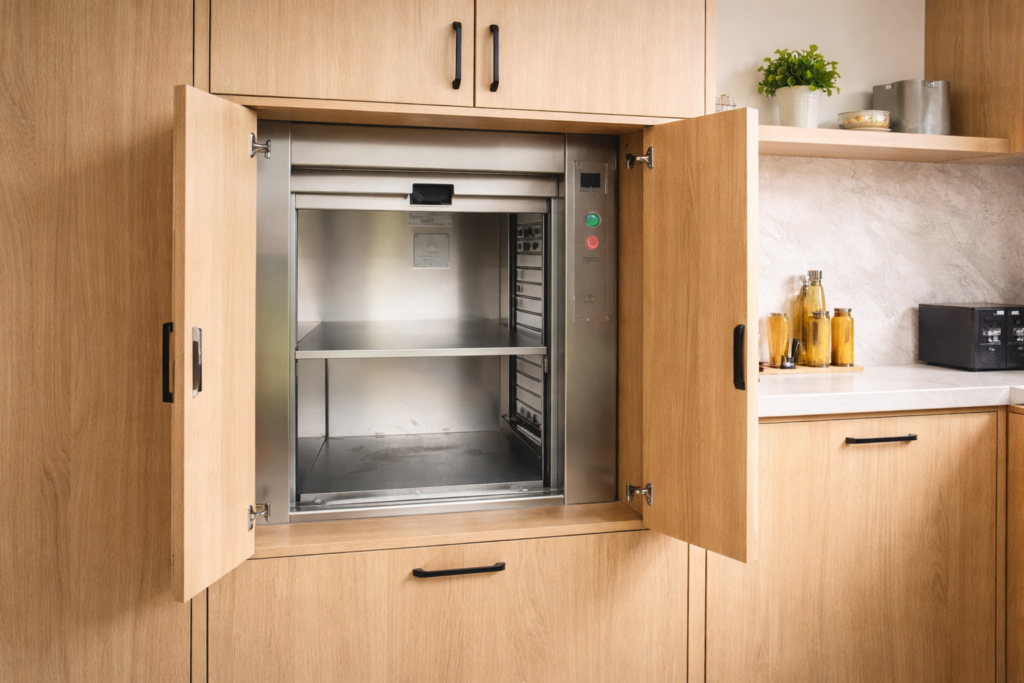

In high-end residential and hospitality projects, functionality must never interrupt the visual flow of a space. Architects and designers are increasingly looking for ways to integrate essential building systems so discreetly that they are barely noticeable. Dumbwaiters are no exception. When thoughtfully designed, a dumbwaiter can be concealed within joinery or cabinetry, delivering practical benefits without compromising the interior design.
At Husbands, we regularly work with design teams to create bespoke dumbwaiters that disappear into their surroundings, supporting refined interiors while maintaining efficient movement between floors.
Why Concealment Matters in Luxury Projects
Luxury environments are defined by clean lines, considered materials, and visual calm. This focus on discreet functionality is one of the reasons bespoke dumbwaiters are increasingly specified in luxury interiors. Exposed service equipment can disrupt this balance, particularly in open-plan homes, boutique hotels, private dining spaces, and premium retail settings.
Concealed dumbwaiters allow architects to preserve the intended aesthetic of a space while still providing a reliable solution for moving food, drinks, laundry, or supplies. The lift becomes part of the architecture rather than an obvious piece of machinery.
Early Design Coordination Is Essential
Successful concealment starts at the design stage. When a dumbwaiter is considered early, joinery layouts, wall depths, and cabinet dimensions can be coordinated around the lift rather than adjusted later.
Early collaboration between architects and designers, interior designers, joiners, and lift specialists allows for precise detailing, ensuring doors align with cabinetry lines and finishes are consistent across the space. This approach avoids compromises that can occur when a lift is added late in the build process.
Integrating Dumbwaiter Doors into Joinery
One of the most effective ways to conceal a dumbwaiter is by integrating the landing doors directly into bespoke joinery. Panels can be designed to match surrounding cabinetry so closely that the lift door is indistinguishable when closed.
This technique is commonly used in luxury kitchens, bars, and service areas, where maintaining a clean, uninterrupted appearance is critical. Accurate tolerances and high-quality hardware ensure doors operate smoothly without rattling or misalignment.
Material and Finish Selection
Bespoke dumbwaiters allow complete flexibility in material choice. Doors and surrounding panels can be finished in timber veneers, painted finishes, or specialist materials to match the wider interior scheme.
Internally, cabins can be specified for durability and hygiene, while externally the focus remains on visual continuity. This dual approach ensures performance and appearance are both addressed.
Managing Noise and Movement
When a dumbwaiter is concealed within cabinetry, acoustic performance becomes even more important. Quiet motors, smooth control systems, and vibration isolation prevent noise from transferring into adjacent rooms or resonating through joinery units.
Careful installation ensures the lift operates discreetly, supporting the calm atmosphere expected in high-end environments.
Working Within Tight or Non-Standard Spaces
Many projects that require concealed dumbwaiters also feature limited space or unconventional layouts. Bespoke design allows shaft sizes, door positions, and loading configurations to be adapted to suit available space.
This flexibility makes it possible to integrate dumbwaiters into locations where standard systems would be impractical, such as narrow service zones, pantry walls, or behind bar cabinetry. As outlined in our comparison of bespoke dumbwaiters versus off-the-shelf models, standard systems rarely offer the adaptability required for this level of integration.
Maintenance Access Without Visual Impact
Concealment does not mean compromising access for servicing. A well-designed system includes discreet access points for maintenance that do not disturb finished interiors.
By planning for servicing during the design phase, architects can ensure long-term reliability without the need for intrusive works later.
Applications Across Residential and Hospitality Projects
Concealed dumbwaiters are commonly specified for luxury homes, boutique hotels, private clubs, and high-end restaurants. In each case, the goal is the same: discreet functionality that supports service without becoming a visual distraction.
Conclusion
Concealed dumbwaiters offer a powerful combination of practicality and design integrity. By integrating lifts into joinery and cabinetry, architects and designers can maintain clean, refined interiors while still benefiting from efficient vertical transport.
With early planning and a bespoke approach, dumbwaiters can become an invisible yet invaluable part of a luxury project, supporting both everyday use and long-term value.