
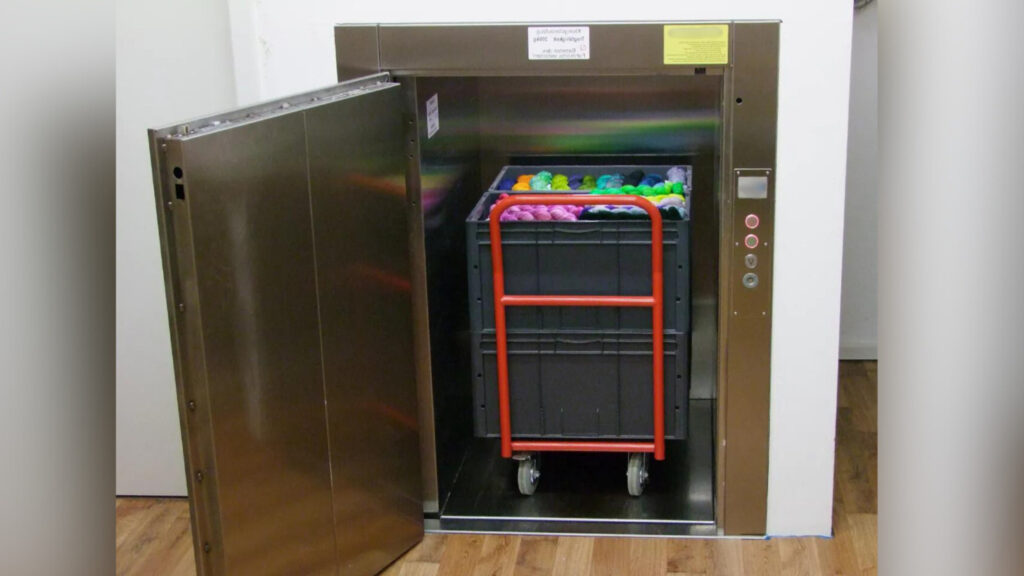

Selecting the right service lift for your building is about more than choosing a model off the shelf. The ideal capacity and configuration depend on what you’re moving, how often, and where it needs to go. Whether you’re fitting out a restaurant, hospital, office, or retail space, understanding the relationship between lift size, weight capacity, and layout can make all the difference in performance and efficiency.
At Husbands, we design and install bespoke service lifts that are built around your operational needs. From compact dumbwaiters to large goods lifts, our team ensures every system is engineered to handle the demands of your space.
Understanding Capacity: Matching the Lift to Its Purpose
Capacity is the first and most critical consideration when specifying a service lift. It determines how much weight your lift can safely carry at one time and directly impacts performance and longevity.
For example, a small dumbwaiter for a café or restaurant may only need to carry 50–100 kg, ideal for food trays, crockery, or supplies. In contrast, a trolley lift or goods lift designed for a hotel, hospital, or warehouse could require a capacity of 250 kg or more to safely handle heavier loads such as linen trolleys, bulk goods, or equipment.
Choosing a lift that’s too small can cause strain on the system and increase maintenance needs. Oversizing, on the other hand, can waste space and energy. Striking the right balance ensures safety, reliability, and efficiency.
Explore our full guide to dumbwaiter sizes and capacities
Configuration: How Design Impacts Function
Once the appropriate capacity is determined, configuration comes into play. This refers to how the lift operates within your building layout — including door orientation, number of stops, entry points, and how items are loaded or unloaded.
For instance, a through-loading configuration (with doors on opposite sides) is ideal for kitchens or logistics areas where workflow moves in one direction, while a front-loading design may suit a compact bar or office. Lift height, shaft location, and available space will also influence the overall setup.
The key is ensuring your service lift works with your environment, not against it. At Husbands, we assess each building individually to design systems that complement daily operations and meet regulatory requirements.
Considering Space and Shaft Requirements
Every building is unique, and available shaft space often determines what’s possible. Retrofitting a lift into an existing property may require compact designs or custom dimensions to fit tight areas without structural alteration. Our bespoke engineering approach means we can adapt to these constraints without compromising performance.
If you’re unsure what will fit your space, our service and goods lift size guide provides clear dimensions and specifications to help you compare options.
Factoring in Frequency of Use
The intensity of use also affects which lift is right for your property. High-use environments such as hotels, hospitals, or manufacturing sites need lifts built for durability, with reinforced components and higher duty cycles. Lighter-use applications, like offices or residential buildings, can benefit from smaller, energy-efficient systems.
We tailor lift specifications based on how often they’ll be used, ensuring long-term reliability and value for money.
Customising for Safety and Efficiency
Beyond size and load capacity, modern service lifts can be configured with features that enhance safety, hygiene, and convenience. From automatic doors and soft-start motors to antimicrobial finishes and noise reduction, each detail can be specified to suit your environment.
We also design for compliance with UK and European standards, including BS EN 81-3 and LOLER, giving you confidence that every lift meets the latest safety and performance requirements.
Conclusion: The Right Lift, Built Around You
Selecting the right service lift is about finding a balance between capacity, configuration, and space. With Husbands, you don’t have to make that decision alone. Our team will assess your needs, recommend the ideal system, and design a lift that integrates seamlessly into your building.
Whether you need a compact dumbwaiter or a high-capacity goods lift, we’ll help you choose a system that performs efficiently and reliably for years to come.
Contact us today to discuss your project and find the perfect lift configuration for your space.