
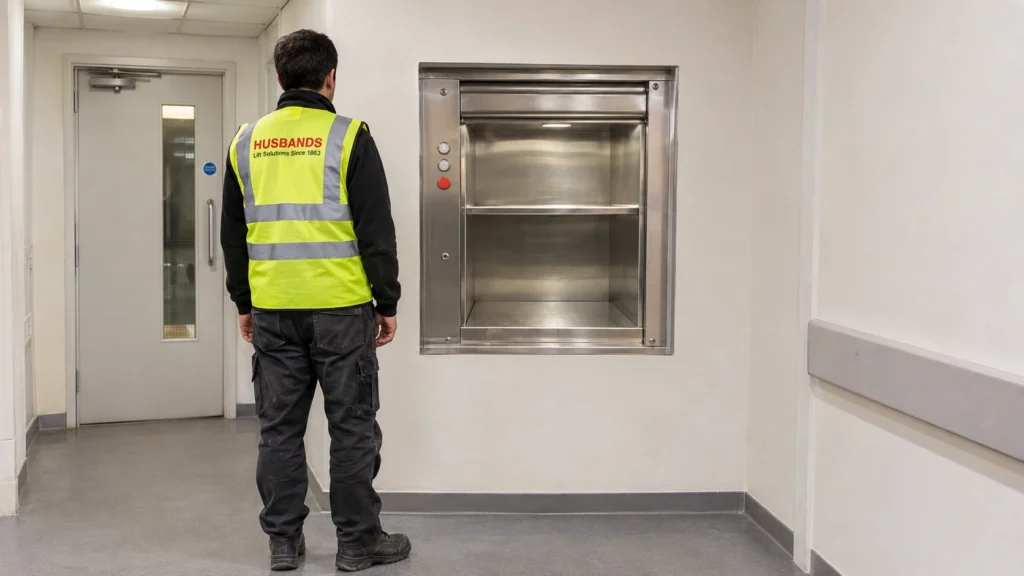

A dumbwaiter is a small goods-only lift used to move items between floors. A passenger lift, also known as an elevator, is designed to carry people. People must never travel in a dumbwaiter, regardless of its size or weight capacity.
For building owners, architects and commercial operators, choosing between them starts with what needs to move. Meals, laundry and stock may suit a dumbwaiter or larger goods-only lift. Moving people requires a lift specifically designed for passenger use.
This guide explains the differences, including loading arrangements, space requirements, costs and when a trolley lift or goods lift may be more suitable.
Dumbwaiters and passenger lifts compared
| Feature | Dumbwaiter | Passenger lift |
|---|---|---|
| Main purpose | Transporting smaller goods between floors | Transporting people between floors |
| Passenger travel | Not permitted | Permitted within the lift’s intended use and rated capacity |
| Typical loads | Meals, crockery, groceries, documents and supplies | People, sometimes alongside luggage or goods |
| Loading access | Often counter-height, with floor-loading options available | Floor-level access |
| Controls | Normally operated from the landings | Controls inside the car and at the landings |
| Space requirements | Usually a smaller lift car and shaft | Space for a passenger car and associated equipment |
| Main selection factors | Load dimensions, weight, loading method and frequency of use | Passenger demand, accessibility, capacity and building layout |
What is a dumbwaiter lift used for?
A dumbwaiter transports goods between two or more floors without someone accompanying the load. Items are placed inside the lift car, the landing door is closed, and the lift is sent to the required floor using the controls.
Dumbwaiters are also called food lifts, kitchen lifts or service lifts, depending on their application. They are used in:
- Restaurants and cafés: moving meals, drinks and crockery between kitchens and dining areas.
- Hotels: transferring supplies between service areas.
- Shops: moving smaller stock items between storage and sales floors.
- Healthcare facilities and laboratories: transporting suitable supplies under the organisation’s handling and hygiene procedures.
- Private homes: moving groceries, dishes and laundry between levels.
Husbands’ commercial dumbwaiters include 50kg and 100kg models, with configurations to suit different layouts and loading requirements.
Capacity is only part of the specification. The car must also accommodate the largest tray, container or item being transported, and the loading height should suit the people using it.
What is a passenger lift used for?
A passenger lift carries people between floors. Its car, entrances, controls and safety systems are designed for occupants to travel inside.
Passenger lifts are common in offices, hotels, apartment buildings and shopping centres. Depending on their specification, they can accommodate wheelchair users, pushchairs, luggage and other everyday loads.
Where a building needs both passenger access and regular goods movement, separate lifts may serve different purposes. A restaurant, for example, may use a passenger lift for guests and a dumbwaiter between its kitchen and dining floors.
Can a person travel in a dumbwaiter or goods lift?
Nobody should travel in a dumbwaiter. Its rated load refers to the goods it can carry, not permission to carry a person.
The same caution applies to larger goods-only lifts. A car that is physically large enough to enter is not automatically approved for someone to travel inside.
Some lift types are designed to carry goods with an attendant. That capability must be confirmed from the equipment’s specification and intended use, rather than assumed from its dimensions or capacity.
HSE’s guidance on lifting equipment explains the importance of selecting equipment appropriate to the task and observing its safe working load.
How much space does a dumbwaiter need?
A dumbwaiter requires less space than a passenger lift, but there is no single shaft size that suits every installation.
The space needed depends on:
- The usable car width, depth and height.
- Load capacity and lifting arrangement.
- Number and position of landing entrances.
- Travel distance and number of floors served.
- Required pit depth and headroom.
- Access for installation and future maintenance.
The lift car dimensions are not the same as the overall shaft dimensions. Machinery, guides, doors and necessary clearances must also be accommodated.
For projects with unusual layouts or particular interior requirements, bespoke dumbwaiters can be designed around the available space, intended loads and finishes. Early assessment helps establish what is feasible before building work progresses.
When is a trolley lift or goods lift more suitable?
A counter-height dumbwaiter works well for items that can be placed into the car by hand. It may be less practical when loads arrive on wheels or are too bulky to handle comfortably.
Trolley lifts for wheeled loads
A floor-loading trolley lift allows suitable trolleys or carts to be wheeled into the car. This can reduce the need to unpack goods at one floor and reload them at another.
Check the trolley’s overall dimensions, including handles and projecting parts. Its weight must also be included when calculating the total load.
Goods lifts for larger or heavier items
A goods lift may be more appropriate for bulky stock, equipment or heavier loads.
The specification should account for the door opening, usable car dimensions, loading method and expected frequency of use. If an operator needs to accompany the goods, that requirement must be identified before selecting the equipment.
Does a dumbwaiter cost less than a passenger lift?
A small dumbwaiter will generally cost less to install than a passenger lift. However, the two systems fulfil different needs, so price alone should not determine the choice.
The total installation cost depends on the lift specification and the work needed to accommodate it. Important factors include the number of stops, travel distance, structural alterations, shaft construction, electrical supply, door arrangements and fire protection requirements.
A straightforward installation in a prepared shaft will differ considerably from a bespoke project in an occupied or heritage building.
Compare quotations against the same scope of work, including builders’ work, installation, commissioning and ongoing maintenance arrangements.
Do dumbwaiters need servicing and safety examinations?
Dumbwaiters need maintenance appropriate to their design, use and condition. Doors, interlocks, controls and lifting components require attention to support safe, reliable operation.
For workplace equipment subject to LOLER, statutory thorough examination is a separate requirement from routine servicing. A service visit does not replace a thorough examination.
The arrangements for a particular installation should be confirmed with a competent person. HSE provides further information in its guidance on thorough examination and testing of lifts.
Maintenance access and future servicing requirements should be considered during specification, rather than after the lift has been installed.
Which type of lift does your building need?
Start by identifying what needs to move, how it will be loaded and whether anyone must travel with it.
A dumbwaiter may suit meals, laundry and smaller supplies. A trolley lift can accommodate suitable wheeled loads, while a larger goods lift may be needed for heavier or bulkier items. Passenger travel requires equipment designed for that purpose.
Husbands specialises in dumbwaiters, trolley lifts and goods lifts for commercial and residential properties. If you are unsure which option would suit your building, contact the team to discuss your layout, loads and installation requirements.